Columbiana Winter Heating Prep Checklist
By Birmingham Heating & Air Conditioning • Updated 2026 • 9 min read
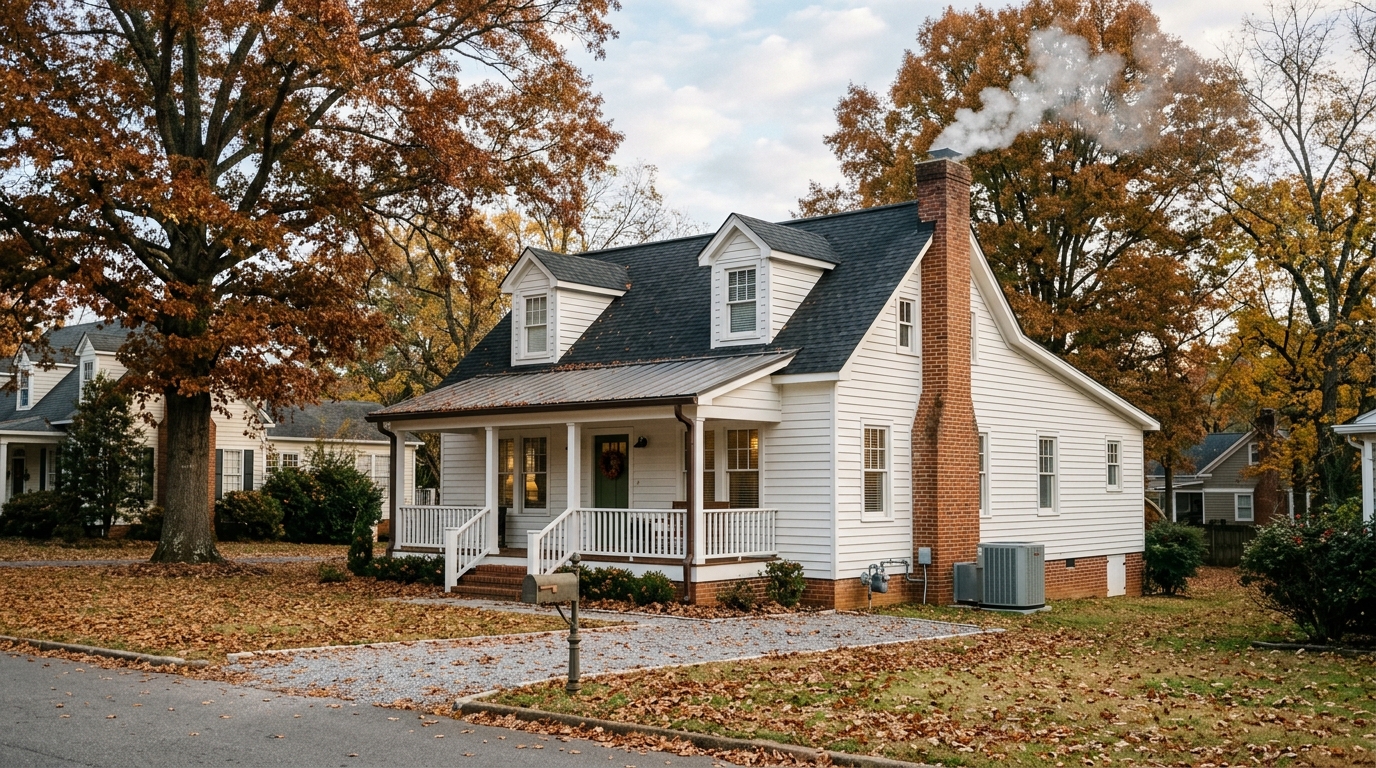
Columbiana sits in a stretch of Shelby County where winters look mild on average and then turn ugly without warning. A typical December is in the 40s and 50s. Then January throws a 19°F night at you and somebody's furnace fails at 2 AM. The homeowner who did the prep work in October is fine. The one who did not is calling around at 6 AM hoping someone has a part on the truck.
Here is the prep checklist I run for my own family — and the same one I tell Columbiana homeowners to run on their own equipment.
Why Columbiana Winters Catch Homeowners Off Guard
Columbiana's climate is asymmetric. Cooling season is six months and brutal. Heating season is three months and mild on average — but with sharp cold snaps that get colder than people remember. The result: heating equipment that has been sitting idle for seven months gets asked to perform at peak right when no contractor has open same-day slots.
Older Columbiana housing stock — the downtown homes south of Mildred Street, the older builds along Highway 25 toward Wilsonville — adds another wrinkle. Many of these homes have gas furnaces from the 90s and early 2000s installed in unconditioned crawl spaces, with original ductwork that has been bouncing around through twenty Alabama humidity cycles. Equipment in that environment fails on the first hard freeze of the year more often than newer equipment in conditioned utility rooms.
The fix is preventive. None of what follows is expensive. All of it matters.
October — The Real Heating Prep Month
Do not wait until you need heat. Run through this checklist in October, when the weather is still pleasant and you can take the equipment offline without freezing.
Replace the air filter. Yes, again. The summer's worth of dust, pollen, and pet hair is sitting in that filter. Fresh filter before heating season.
Cycle the heat for a full hour. Set the thermostat to heat mode and a setpoint above current room temperature. Listen. A furnace that has not run in seven months will burn off dust the first cycle — that mild burning smell is normal for the first 10-15 minutes and goes away. Anything else — grinding, banging, hissing, ozone smell, unusual rumbling — is not normal. That is your sign to call before the cold arrives.
Test the carbon monoxide detector. Press the test button. If it does not beep, replace it. If it is more than 7 years old, replace it anyway — the sensor degrades. Per CPSC guidance, every home with gas-burning equipment needs a working CO detector on each level and near sleeping areas.
Walk the exterior. Look at the furnace flue, the heat pump outdoor unit, or both. Clear leaves from around the unit. Confirm that the flue cap is intact and unobstructed. A nest in a furnace flue is a real winter killer in Columbiana — it pushes combustion gases back into the home.
Inspect visible ductwork. If you have crawl space ductwork or attic ductwork, take a flashlight and look. Disconnected joints, crushed flex duct, insulation pulling away — note any of that for the professional tune-up.
Gas Furnace Pre-Season Checklist
Most Columbiana homes still heat with gas. Here is what a real pre-season visit covers — what to look for and what to ask.
Heat exchanger inspection. The non-negotiable. A cracked heat exchanger leaks combustion gas — including carbon monoxide — into your supply air. Per our furnace repair vs replace guide, a confirmed cracked heat exchanger is always a replacement decision, not a repair decision. The tech should inspect the heat exchanger visually and with a combustion analyzer that measures CO in the supply air.
Igniter test. Silicon nitride hot-surface igniters are consumables. They develop micro-cracks over time and fail. The tech should measure resistance and visually inspect for cracking. A weak igniter that "passed" last spring is the one that fails on the first cold night.
Flame sensor cleaning. The flame sensor confirms flame presence so the gas valve stays open. It oxidizes during the off-season. A simple cleaning fixes most "furnace cycles on and immediately shuts down" complaints in early heating season.
Draft inducer motor check. The inducer pulls combustion gases through the heat exchanger and out the flue. A failing inducer motor sounds rough at startup, draws more current than nameplate, or fails to start at all. Replacing one before failure is much cheaper than an emergency 2 AM call.
Burner inspection and cleaning. Dust, spider webs, and the occasional small critter accumulate in burner assemblies over the long off-season. The tech should pull the burner assembly, inspect, and clean. Improper combustion from dirty burners produces more CO and lower heat output.
Gas pressure verification. Inlet and manifold pressure should be measured and compared against manufacturer spec. Pressure that is too low produces incomplete combustion. Pressure that is too high overworks the heat exchanger and shortens its life.
Combustion analysis. A combustion analyzer measures CO, oxygen, and stack temperature in the flue gases. This is the most important single measurement in furnace service — it tells you whether the furnace is burning cleanly and whether the heat exchanger is intact.
Heat Pump Pre-Season Checklist
A growing number of Columbiana homes run heat pumps, especially newer builds and homes that have replaced aging dual-system gas-and-AC setups. Heat pump pre-season looks different from furnace pre-season.
Refrigerant charge verification. Heat pumps in heating mode are more sensitive to undercharge than AC-only systems in cooling mode. A heat pump that ran fine all summer can struggle to reach setpoint in cold weather if the charge is low. The tech measures suction and discharge pressure, calculates superheat and subcooling, and confirms charge against manufacturer spec.
Reversing valve test. The reversing valve is the component that lets the heat pump run in both heating and cooling. It sits idle from October through April in cooling-only operation, then has to switch over and run reliably for five months. A stuck or sticky reversing valve is a January failure waiting to happen. Tech should test the valve electrically and confirm it switches modes cleanly.
Defrost cycle verification. In cold humid Columbiana mornings, the outdoor coil of a heat pump frosts up. The defrost cycle reverses temporarily, melts the frost, and resumes heating. A failed defrost board, failed defrost sensor, or failed reversing valve all break this cycle. Pre-season is the time to verify defrost is functioning before you actually need it at 6 AM.
Auxiliary heat verification. Most Columbiana heat pumps have electric strip heat backup for very cold mornings and emergency mode. Tech should confirm the strips energize correctly and draw expected current. Aux heat that is stuck on during normal operation will spike your power bill catastrophically.
Crankcase heater check. Some heat pump compressors have a crankcase heater that keeps refrigerant from migrating to the compressor oil in cold weather. A failed crankcase heater leads to compressor damage on cold startup.
Older Columbiana Home Watch-Outs
If your Columbiana home was built before 2000, pay extra attention to these.
Crawl space ductwork. Many older Columbiana homes have galvanized metal trunk ducts and aging flex branch runs in unconditioned crawl spaces. Forty years of expansion and contraction loosens every joint. Heat loss through leaky crawl space ductwork in winter is significant — the system runs longer, fuel costs are higher, and the rooms farthest from the furnace stay cold no matter what the thermostat says.
Heat exchanger age. Heat exchangers in 1990s and early 2000s furnaces are reaching the end of their realistic service life. Per our furnace replace guide, the heat exchanger is the safety-critical component. A 22-year-old heat exchanger needs every-fall inspection without fail.
Flue and chimney issues. Older homes sometimes have furnaces venting into masonry chimneys without proper liners. Condensation from modern higher-efficiency equipment can damage the chimney and create draft problems. If your furnace was upgraded but the chimney was not relined, that is a problem worth fixing.
Cracked or compromised insulation. Insulation on combustion gas piping, on flue connectors, and around heat exchangers deteriorates over time. Compromised insulation is a safety issue — combustion gas pipes get hot.
Original electrical. Older furnace installations often used the smallest acceptable wire gauge for the original equipment load. Replacement equipment may draw more current. Heat that "trips a breaker" is electrical, not mechanical — and dangerous to keep resetting.
What to Do Before a Cold Snap
When the National Weather Service forecasts a hard freeze for Shelby County, run this short checklist that evening.
- Open every supply register. Confirm every return is unobstructed.
- Replace the air filter if it has been in for more than 30 days.
- Set the thermostat to heating mode at a setpoint you can hold (68-70°F for most homes).
- Crack cabinet doors under any sinks on exterior walls to let heat reach the pipes.
- Set faucets on a slow drip on the coldest exterior wall.
- Test the carbon monoxide detector one more time.
- Have the BHAC service line on your phone: (205) 649-4480.
Companion reading: our broader piece on signs your furnace will not make it through winter covers the seven warning signs to watch for in October, and the spring/fall maintenance schedule ties this checklist into the year-round plan.
We cover all of Columbiana HVAC as well as Chelsea, Calera, Montevallo, and Sylacauga. For the related services, see our furnace repair, heat pump, and maintenance pages.
Why trust this story: Reviewed by Birmingham Heating & Air Conditioning field technicians. Alabama HVAC Contractor licensed and EPA Section 608 Universal certified. Sources: CPSC Carbon Monoxide Safety, DOE Furnaces and Boilers, ENERGY STAR Air-Source Heat Pumps. See our full editorial standards.
Author: John, 35-year HVAC technician, Alabama licensed, bonded, and insured. General guidance for Columbiana-area homeowners. Equipment-specific service requires on-site assessment by a licensed technician. Last updated 2026-05-12.
Related Services
Serving these cities
Chelsea • Calera • Sylacauga • Montevallo • Columbiana
Need HVAC Service?
Licensed Alabama contractor. Written estimate before any work begins. Call anytime.
(205) 649-4480Frequently Asked Questions
Read Next
Keep going. These pair well with what you just read.
About the Author: Birmingham Heating & Air Conditioning provides heating-first residential HVAC service to the Shelby County and Talladega corridor — Chelsea, Calera, Columbiana, Montevallo, and Sylacauga. Work is performed by John M. King, a licensed Alabama HVAC contractor (License #2020068), with 35 years of HVAC experience and EPA Section 608 Universal certification. Call (205) 649-4480 for service.
Ready to schedule service? Call (205) 649-4480 — Birmingham Heating & Air Conditioning serves Shelby County and the Talladega corridor.