Calera Summer Cooling Tips for $250+ Power Bills
By Birmingham Heating & Air Conditioning • Updated 2026 • 9 min read
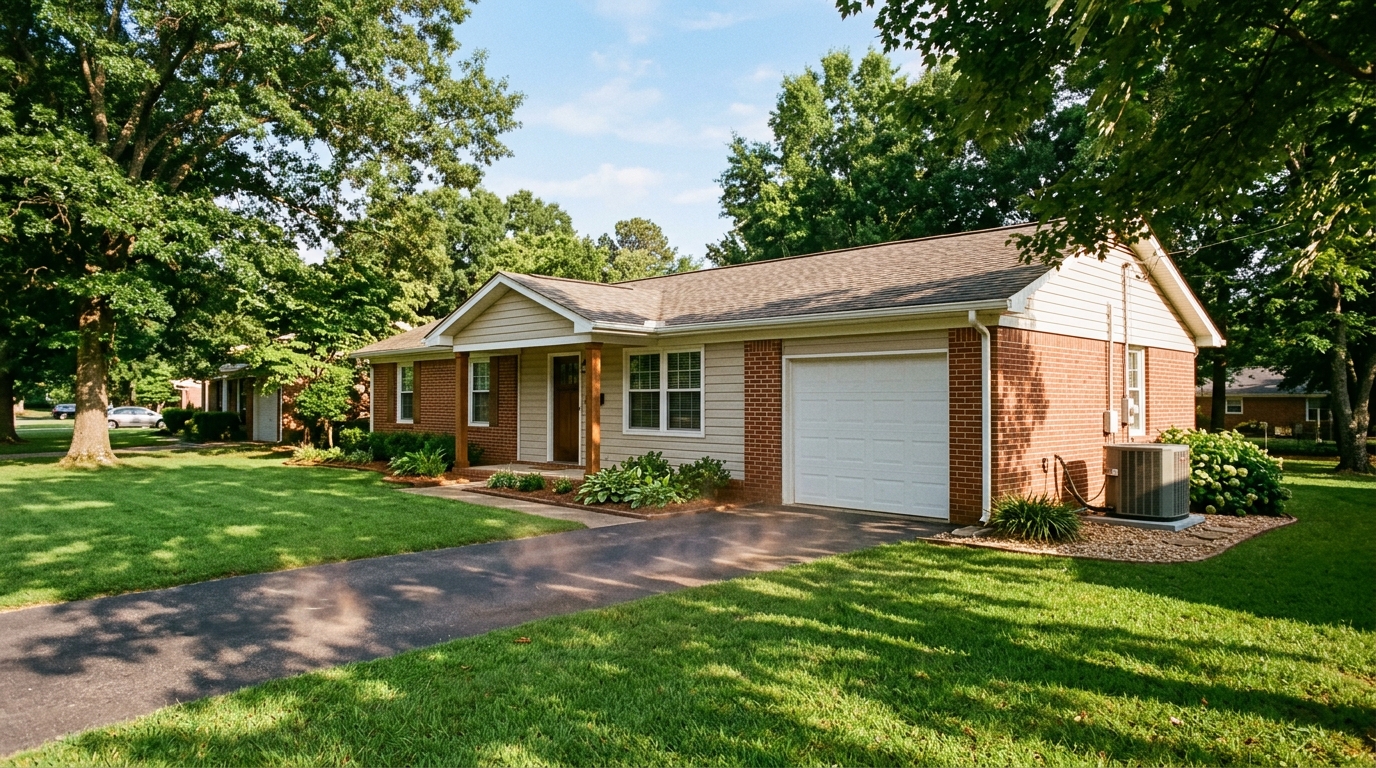
If you live in Calera and your July power bill came in over $250, you are not alone. A lot of Calera homes built between 1995 and 2010 have the same problem — and most of it is fixable without buying a new system. The trick is doing the right fixes in the right order.
Here is the order I run when a Calera homeowner asks me to figure out where their money is going. Same checklist for every house, free fixes first, expensive ones last.
Why Calera Power Bills Run So High in Summer
Calera summers are brutal in a specific way. The town sits in the Cahaba Valley with limited tree canopy in the newer subdivisions. Afternoon sun hits west-facing walls and roofs hard from May through September. Attic temperatures in Calera homes routinely break 130°F by 3 PM. Your ductwork is sitting in that attic.
Three things compound the bill. The cooling load is real and persistent — six straight months. The duct losses through hot attic ductwork are higher in Calera than they would be in a shaded older neighborhood. And many Calera homes from the 2000s building boom were built with adequate-but-not-great insulation that has compacted over the years.
None of that is your fault. All of it is fixable.
Free Fixes (Do These First)
Change the filter. Right now. A clogged filter is the single most common reason a Calera AC works hard, runs long, and dehumidifies poorly. Filters need replacement every 60-90 days in Birmingham's climate. In a Calera home with pets, lawn dust, or a lot of foot traffic — every 30-60 days. A $5 filter can knock 5-15% off your cooling cost. Do not skip this.
Open every supply register. Open every return. Some Calera homeowners close registers in unused rooms thinking it "saves money" by directing air elsewhere. It does the opposite. Closing registers raises duct static pressure, reduces total airflow, and can ice the evaporator coil. Open them all and let the system breathe.
Clear the outdoor condenser. Walk around the outdoor unit. Pull weeds. Trim shrubs back two feet. Pick out leaves and grass clippings from the fins. The condenser rejects heat to the outdoor air — when its airflow is restricted, it cannot do that, which raises head pressure and run time. Five-minute job, free, real impact.
Close the blinds on west and south windows in the afternoon. Sounds simple, sounds dumb. Works anyway. Direct solar gain through bare west-facing glass in Calera afternoons can add the equivalent of a small space heater to the room.
Cheap Fixes Worth the Effort
Programmable or smart thermostat. If you do not have one, get one. The right Calera schedule is straightforward — read our companion piece on what to set your thermostat to in Birmingham summer for the specific setpoints. The math: every degree higher on the cooling setpoint saves roughly 3-5% on cooling cost per DOE guidance. Bumping from 72 to 76 during waking hours, and 78 while you are at work, is real money over a six-month cooling season.
Ceiling fans where you actually sit and sleep. A ceiling fan does not cool the air. It cools you. The perceived temperature reduction is real — three to four degrees. Which means your thermostat can be set three to four degrees higher with the same comfort. Ceiling fans cost very little to run compared to the AC compressor.
Window film on west-facing glass. Solar control film blocks a significant fraction of solar heat without making the room dark. The DIY product is affordable. The professional install is more but lasts longer. In a Calera home with a lot of west-facing glass, this fix is underrated.
Drain line flush. Pour a cup of distilled white vinegar into the AC condensate drain line access twice a year. Prevents the algae clog that causes drain pan overflow and ceiling damage. Costs three dollars. Saves a five-figure ceiling repair.
Medium-Cost Fixes With Real Payback
Duct sealing. The biggest unrecognized money pit in Calera homes. ENERGY STAR estimates the typical home loses 20-30% of conditioned air to duct leaks. In Calera homes with attic ductwork sitting at 130°F, those leaks are dumping cold air into your attic and pulling hot dusty attic air into your supply trunks. Professional duct sealing — done with the right materials at every seam, joint, and boot — recovers most of that lost capacity. The payback in a Calera home with leaky ductwork is fast. We cover the details in our duct cleaning and sealing service page.
Attic insulation top-up. Calera homes built in the late 90s and early 2000s often have R-30 or R-19 insulation that has compacted to R-22 or worse. The DOE recommendation for our climate zone is R-38 to R-49. Blown-in cellulose or fiberglass on top of existing insulation is a one-day job, costs less than people expect, and the heat-load reduction is immediate and permanent.
Annual professional tune-up. A real tune-up is not a "look around and say it is fine" visit. A real tune-up measures refrigerant charge with gauges, tests capacitors against rated value, cleans the condenser coil properly, checks the contactor for pitting, verifies temperature split across the evaporator coil, flushes the drain line, and validates electrical connections. A properly tuned AC moves more air at a given energy cost than one that has not seen a tech in three years. Our spring tune-up service covers the full checklist.
Big Fixes — When the Bill Will Not Come Down Any Other Way
If you have done the free, cheap, and medium fixes and the bill is still over $250 in a 1,800-2,400 sq ft Calera home, the equipment itself is probably the bottleneck.
The system is undersized. Some 2000s-era Calera builds were value-engineered with equipment one tonnage step too small. The system runs nonstop on hot days, never quite reaches setpoint, and grinds toward an early death. Manual J load calculation tells you whether your equipment matches your home.
The system is oversized. The opposite problem — equipment too big short-cycles, never runs long enough to dehumidify, and leaves the home feeling cold-and-clammy at 74°F instead of comfortable at 76°F. Both problems waste money. Both are fixable only with right-sized equipment.
The system is old and inefficient. A 2003-vintage 10 SEER system in a Calera home is consuming roughly twice the electricity of a modern 16 SEER2 system for the same cooling output. If the equipment is past 15 years and the bill is high, the math may favor replacement over more tune-ups and band-aids. The replacement signals guide walks through the math.
The Thermostat Truth
Nobody likes hearing this part. The right summer thermostat setting for Calera is 76-78°F when you are home, 80-82°F when you are out. Not 70. Not 72. 76-78.
I know. I have heard every argument. "But my house feels stuffy at 78." That is a humidity problem, not a temperature problem — a properly working AC in a properly insulated Calera home keeps relative humidity in the 45-55% range and 78°F at 50% relative humidity is genuinely comfortable. If it is not for you, run through the duct sealing and tune-up fixes above before assuming you need to set the thermostat lower.
The other reality: every degree below 78 in Birmingham's climate costs real money. Going from 76 to 72 in a Calera summer is not a free choice. It is an expensive choice. Make it knowingly.
If you want city-specific notes, see our Calera HVAC page. For neighboring service areas with similar housing stock, see Chelsea, Columbiana, and Montevallo. The companion service pages are AC repair, maintenance, and duct cleaning and sealing.
Why trust this story: Reviewed by Birmingham Heating & Air Conditioning field technicians. Alabama HVAC Contractor licensed and EPA Section 608 Universal certified. Sources: DOE Programmable Thermostats, ENERGY STAR Duct Sealing, DOE Insulation. See our full editorial standards.
Author: John, 35-year HVAC technician, Alabama licensed, bonded, and insured. General guidance for Calera-area homeowners. Specific equipment recommendations require on-site assessment. Last updated 2026-05-12.
Related Services
Serving these cities
Chelsea • Calera • Sylacauga • Montevallo • Columbiana
Need HVAC Service?
Licensed Alabama contractor. Written estimate before any work begins. Call anytime.
(205) 649-4480Frequently Asked Questions
Read Next
Keep going. These pair well with what you just read.
About the Author: Birmingham Heating & Air Conditioning provides heating-first residential HVAC service to the Shelby County and Talladega corridor — Chelsea, Calera, Columbiana, Montevallo, and Sylacauga. Work is performed by John M. King, a licensed Alabama HVAC contractor (License #2020068), with 35 years of HVAC experience and EPA Section 608 Universal certification. Call (205) 649-4480 for service.
Ready to schedule service? Call (205) 649-4480 — Birmingham Heating & Air Conditioning serves Shelby County and the Talladega corridor.