Chelsea AL HVAC: What Homeowners Pay and Why
By Birmingham Heating & Air Conditioning • Updated 2026 • 9 min read
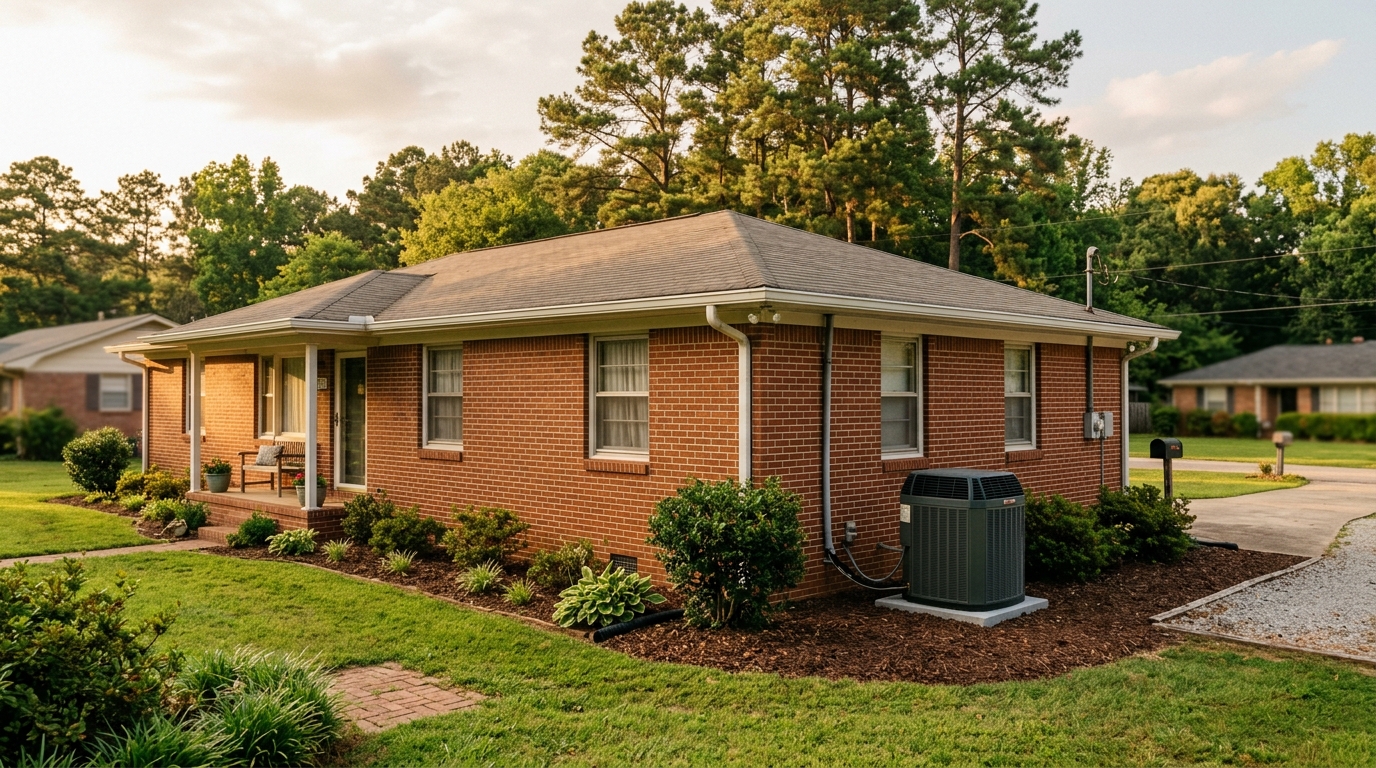
Most Chelsea homeowners I talk to do not want a sales pitch. They want a straight answer. "What is this going to cost me, and why?" Fair question. After 35 years on HVAC trucks across Shelby County, here is the honest version.
I am not going to put dollar amounts on this page. I do not control what your specific equipment needs, and a contractor who gives you a flat number before opening the unit is guessing. What I can do is walk you through the cost drivers so when you get a quote — from us or anybody else — you can read it like a pro.
Why Chelsea Homes Cost What They Cost to Service
Chelsea is not one housing stock. It is several. That matters more for HVAC pricing than most people realize.
Up in Chelsea Park, Old Town Chelsea, and the newer Highway 280 corridor builds, you have 2010-and-newer construction. Newer ductwork. R-410A refrigerant. Tighter envelopes. Standard tonnage equipment that any honest tech can service in a single visit. Costs there track close to the regional average.
Drop south toward the Dunnavant Valley side or the older Highway 47 stretches and the picture changes. Homes from the 80s and 90s. Air handlers in unconditioned attics that hit 130°F by 2 PM in July. R-22 line sets that need to be evacuated and replaced if you are doing a refrigerant changeover. Ductwork that was tight when it was installed and has been pulling apart at the seams ever since. That work takes longer and costs more. Not because the contractor is gouging you. Because the job is bigger.
So when somebody quotes you for "AC replacement in Chelsea" without walking your attic first, take the number with a grain of salt. The attic is where the real money is.
What Actually Drives a Repair Bill
Three things. That is it.
The part itself. A capacitor is a small electrical component. A compressor is the most expensive single part on the system. Between those two extremes you have contactors, igniters, blower motors, control boards, TXV valves, and a long list of others. The part is what it is. We do not mark it up to the moon, and any contractor who does should not get your business.
The refrigerant situation. If your system is on R-22 — and many Chelsea homes built between 1995 and 2010 still are — refrigerant work is significantly more expensive than R-410A work. R-22 has been phased out for new production since 2020. What is in the supply chain is reclaimed stock. The price reflects that. If your tech tells you R-22 costs more, they are not lying. SEER2 ratings and equipment efficiency get bundled into this conversation when we recommend replacement instead of recharge.
The diagnostic time. Some failures announce themselves loud and clear. The contactor is fried, you can see the burn marks, ten-minute fix. Other failures hide. A refrigerant leak that loses a quarter pound a month is going to take real time to find with electronic leak detection, soap testing, and pressure decay testing. The honest tech bills the time they spent. The dishonest one guesses and charges you for being wrong twice.
What Actually Drives an Install Quote
If you are getting a Chelsea HVAC replacement quote, these are the line items that should appear. If they do not, ask why.
Tonnage. A 1,800 sq ft Chelsea ranch needs different equipment than a 3,200 sq ft two-story off Highway 280. The right way to size a system is a Manual J load calculation that accounts for insulation, window area, exposure, and the actual ductwork you have. Rule-of-thumb sizing — "one ton per 500 sq ft" — is how people end up with oversized systems that short-cycle, fail to dehumidify, and run their utility bills up. Read our companion piece on what size AC you actually need for the math.
Equipment tier. The federal minimum for new central AC in the Southeast is 15 SEER2. Most quality residential installs land between 15 and 17 SEER2. Above that you get into two-stage and variable-speed equipment that can run dramatically more efficiently in Birmingham's six-month cooling season but carries a real premium. The right tier depends on how long you plan to own the house and how high your summer power bills are.
Air handler vs full system. Replacing just the outdoor condenser when the indoor coil and air handler are aging mismatches the system. SEER2 ratings are based on matched components. A new condenser on an old coil does not deliver the efficiency on the sticker. Some Chelsea homeowners get a "cheap condenser swap" quote, take it, and end up replacing the air handler eighteen months later for the second labor charge.
Ductwork. This is where quotes diverge most. New high-efficiency equipment dumped onto leaky 1995 ductwork performs nothing like the spec sheet promises. ENERGY STAR data shows the typical home loses 20-30% of conditioned air to duct leaks. A good Chelsea install quote either includes duct sealing, duct repair, or an honest statement that your existing ductwork is in shape and does not need work. A quote that says nothing about ductwork is incomplete.
Permit fees. Shelby County requires permits for HVAC equipment replacement. The fee is modest. It should be on the quote. If it is not, somebody is planning to skip the permit, and you do not want that — it can complicate future home sales and voids manufacturer warranty in some cases.
Manufacturer warranty registration. Most major brands offer extended parts warranty when the system is registered within 60-90 days of installation. The contractor is supposed to register it on your behalf. Confirm in writing they will.
Why Two Quotes Are a Thousand Dollars Apart
You called three Chelsea HVAC contractors. The first quote is reasonable. The second is significantly higher. The third is suspiciously cheap. Welcome to the most confusing part of buying HVAC.
The expensive quote is usually one of three things. The contractor sized correctly and the cheaper guys did not. The contractor included ductwork or modifications the cheaper guys skipped. Or the contractor is simply higher on labor and overhead than the market.
The cheap quote is usually one of three things. The contractor is using lower-tier equipment than the others (cheaper brand, cheaper SEER2 rating, no air handler match). The contractor is skipping ductwork that genuinely needs attention. Or the contractor is unlicensed, uninsured, or working without permits.
The honest test is line-by-line comparison. If two quotes both spell out equipment model, SEER2 rating, tonnage, ductwork scope, permit, and warranty registration — and they still differ by a meaningful amount — somebody is genuinely cheaper or more expensive on labor and overhead. That is a fair business comparison.
If a quote is just a single number on a page, you cannot compare it to anything. Ask for the line items. A contractor who refuses to itemize is hiding something.
Red Flags in a Quote
- "Free refrigerant recharge" on an older R-22 system. Either the contractor is losing money on you, or there is a leak they have not told you about and you will be paying for refrigerant every summer for the rest of the system's life.
- Diagnostic without measurements. "Your refrigerant is low" — based on what? Gauges? Superheat and subcooling calculations? A good Chelsea HVAC tech can tell you the exact pressure readings they took. A bad one says "trust me." Walk through the diagnostic decision tree in our companion piece on why an AC blows warm air if you want the technical version.
- Pressure to decide today. "This deal expires when I leave." A legitimate replacement is a five-figure decision. You are allowed to think about it for 48 hours. Anyone who will not let you is selling you something other than HVAC.
- No written quote. Verbal estimates that "grow" when the invoice arrives are the single most common complaint in the HVAC industry. Insist on writing.
- No license number on the paperwork. Alabama requires HVAC contractors to hold a state license issued by the Board of Heating and Air Conditioning Contractors. The license number should be on every truck and every invoice. Verify it at the board's website before signing.
- No mention of Manual J or load calculation. "I sized your system by walking around" is not sizing. It is guessing.
How a Chelsea Homeowner Protects Themselves
Five things. None of them cost anything.
Get two or three quotes. Not five. Five quotes wastes your time and the contractors'. Two or three written quotes from licensed Alabama HVAC contractors gives you enough information to compare.
Verify the license. Alabama HVAC licenses are public record. Confirm the contractor holds an active state license. Confirm the technician performing refrigerant work holds EPA Section 608 certification. Both are federal requirements, not optional.
Read the line items. Equipment model, SEER2 rating, tonnage, air handler match, ductwork scope, permit, warranty registration. If any of those are missing, ask. If the contractor cannot answer cleanly, choose somebody who can.
Ask about the warranty. Parts warranty (typically 5-10 years on major components). Labor warranty (typically 1-2 years). Compressor warranty (typically 10 years). Get all three in writing.
Walk your own attic. Look at the ductwork. If you see crushed flex duct, disconnected joints, or insulation that looks like it has been beaten up for thirty years — that is going to affect your quote whether the contractor mentions it or not. Knowing what is up there makes you a better customer. Our piece on HVAC problems in older Birmingham homes walks through the most common attic findings.
Service-wise, we cover all of Chelsea HVAC and the surrounding Highway 280 and Highway 47 corridors. The companion city pages for Calera, Columbiana, and Montevallo have city-specific notes if your situation crosses jurisdictions. For the underlying services, see our pages on AC repair, AC installation, and preventive maintenance.
Why trust this story: Reviewed by Birmingham Heating & Air Conditioning field technicians. Alabama HVAC Contractor licensed and EPA Section 608 Universal certified. Sources: ENERGY STAR Duct Sealing, DOE Central Air Conditioning, EPA Section 608 Technician Certification. See our full editorial standards.
Author: John, 35-year HVAC technician, Alabama licensed, bonded, and insured. General guidance for Chelsea-area homeowners. Specific equipment recommendations require on-site assessment. Last updated 2026-05-12.
Related Services
Serving these cities
Chelsea • Calera • Sylacauga • Montevallo • Columbiana
Need HVAC Service?
Licensed Alabama contractor. Written estimate before any work begins. Call anytime.
(205) 649-4480Frequently Asked Questions
Read Next
Keep going. These pair well with what you just read.
About the Author: Birmingham Heating & Air Conditioning provides heating-first residential HVAC service to the Shelby County and Talladega corridor — Chelsea, Calera, Columbiana, Montevallo, and Sylacauga. Work is performed by John M. King, a licensed Alabama HVAC contractor (License #2020068), with 35 years of HVAC experience and EPA Section 608 Universal certification. Call (205) 649-4480 for service.
Ready to schedule service? Call (205) 649-4480 — Birmingham Heating & Air Conditioning serves Shelby County and the Talladega corridor.