Sylacauga AC Repair Cost Ranges
By Birmingham Heating & Air Conditioning • Updated 2026 • 9 min read
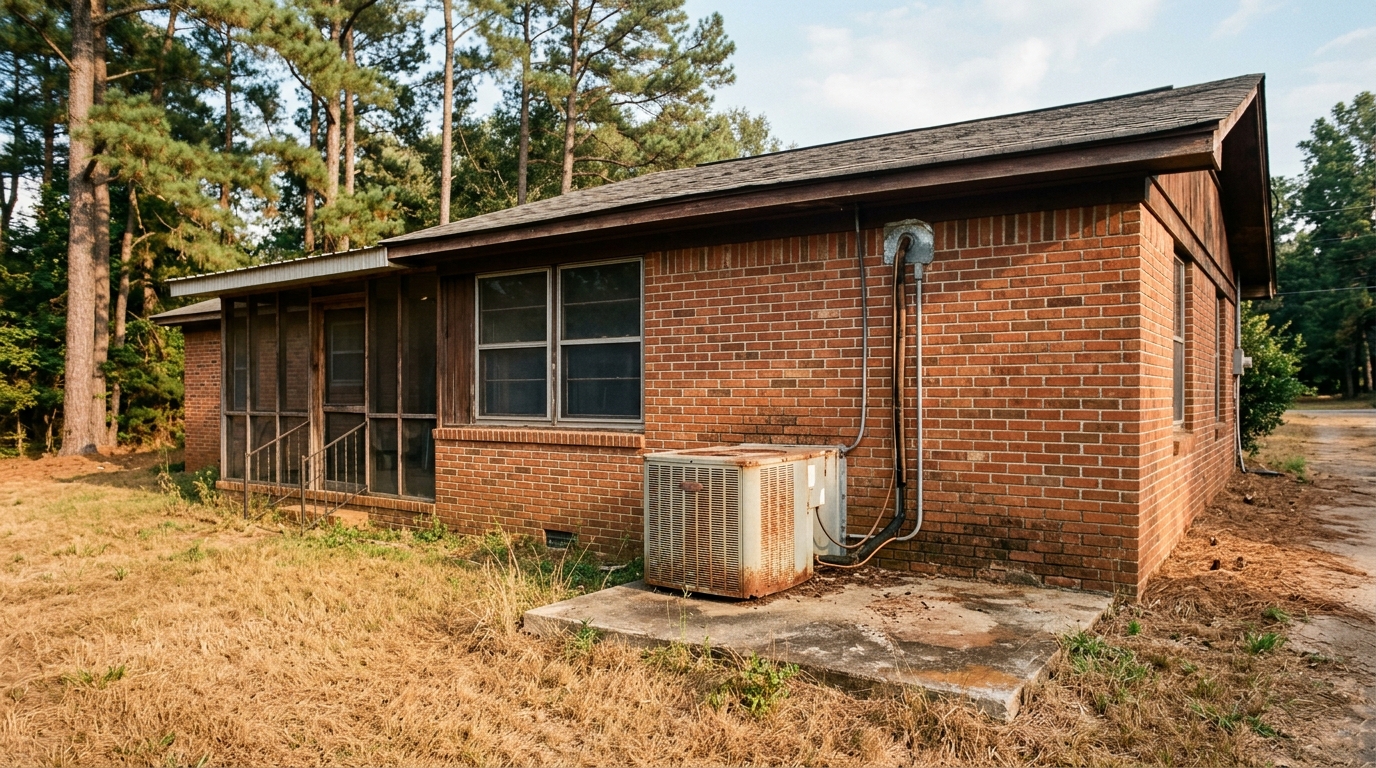
Most Sylacauga homeowners do not want a pitch. They want to know what they are paying for and why. After 35 years on trucks across the Talladega corridor, here is what really drives the AC repair quote you are looking at.
I am not going to put dollar amounts on this page. The honest answer is "it depends on what failed and what your system uses for refrigerant" — and any tech who quotes blind is guessing. What I can do is walk you through the tiers so you can read your quote like somebody who knows the work.
Why Sylacauga AC Repairs Vary So Much
Sylacauga has a mix of housing stock that matters more for repair cost than most homeowners realize.
The downtown and Old Sylacauga neighborhoods south of Highway 280 have homes from the 1950s, 60s, and 70s. Many of these still run AC systems installed in the late 90s and 2000s — on R-22 refrigerant. The Marble Valley and Highway 21 corridor builds skew newer, with R-410A systems and tighter ductwork. Out toward Stewartville and Hollins, you get an even older housing stock with HVAC equipment that has been patched together over decades.
Two Sylacauga homes can call for the "same" AC repair — say, a no-cool diagnostic on a 90°F afternoon — and get quotes that legitimately differ. One has a clean R-410A system with a $30 capacitor that failed. The other has an aging R-22 system with a slow leak that needs hours of leak detection and a refrigerant recharge that costs four to five times what R-410A would. Same call. Very different bill. Neither contractor is wrong.
Small Repair Tier — Fast Fix Failures
These are the cheapest repairs and the most common Sylacauga summer call. If your AC died and the diagnostic finds one of these, you are in good shape.
Capacitor replacement. The single most common AC failure in Birmingham-area homes. The capacitor energizes the compressor and outdoor fan motor. Heat degrades capacitors faster in Sylacauga summers than in cooler climates. Symptoms: AC runs but compressor is silent, loud hum from outdoor unit, system blowing warm air. The part itself is inexpensive. Most techs carry common values on the truck for a same-visit repair. For the full diagnostic decision tree on warm-air symptoms, see our why your AC is blowing warm air piece.
Contactor replacement. The electrical relay that sends power to the compressor when the thermostat calls for cooling. Contacts pit and arc over time. A failed contactor means the outdoor unit does not run at all. Inexpensive part, quick fix.
Drain line clearing. Birmingham's humidity dumps gallons of water through the AC drain line every summer day. Algae clogs the line. The condensate backs up and either trips the safety float switch (system stops cooling) or overflows the drain pan (water on the ceiling). Clearing the line takes minutes.
Float switch tripped. Sometimes the drain line is clear but the float switch needs reset. Inexpensive call. Honest tech will check this first before billing diagnostic time.
Thermostat issues. A failed thermostat or wiring issue at the thermostat is a common Sylacauga call. Sometimes it is a dead battery in the thermostat. Sometimes it is a broken low-voltage wire. Sometimes it is a faulty thermostat that needs replacement. All small-tier repairs.
Medium Repair Tier — Real Work But Worth It
These cost more because the parts cost more or the labor takes longer. Still routinely worth it on a healthy system under 12-15 years old.
Fan motor replacement. The outdoor fan motor moves air across the condenser coil. When it fails, head pressure climbs, the compressor overheats and trips on overload, and the system intermittently cools then quits. Fan motors are mid-range parts. Replacement labor is straightforward when the motor is accessible.
Blower motor replacement. The indoor blower moves conditioned air through the ductwork. When it fails, the system runs but no air moves. ECM (electronically commutated) motors in higher-efficiency systems are more expensive than older PSC motors but more durable and more efficient.
TXV (thermostatic expansion valve) replacement. The metering device that controls refrigerant flow into the evaporator coil. A stuck TXV causes erratic cooling, freezing coils, and inadequate capacity. Replacement requires reclaiming refrigerant, replacing the valve, and recharging — which makes the refrigerant cost on R-22 systems a real factor.
Refrigerant leak repair on R-410A. Finding the leak with electronic detection, soap testing, or pressure decay testing takes time. Repairing the leak (often a Schrader core or a flare fitting on the line set) is fast. Refrigerant recharge on R-410A is reasonably priced. Whole call is medium-tier.
Control board replacement. The board that runs the AC's logic and timing. Mid-range part. Failure is sometimes caused by underlying electrical issues (water damage, voltage spikes, rodent wiring) that need addressing or the new board fails the same way.
Big Repair Tier — Where the Replace Conversation Starts
These repairs are where the math starts favoring replacement over repair, especially on older Sylacauga systems.
Compressor replacement. The most expensive single AC repair. A new compressor on a 12+ year old system rarely makes financial sense — you are putting significant money into equipment that will likely need replacement for unrelated reasons within a few years anyway. Per our signs your AC needs replacement guide, compressor failure is a strong replacement signal on equipment over 10 years old.
Evaporator coil replacement. The indoor coil where refrigerant absorbs heat from the supply air. Coil leaks are common on older systems (especially R-22 systems). Replacement requires reclaiming refrigerant, swapping the coil, recharging, and sometimes reworking the air handler cabinet. On an R-22 system, the recharge alone is a major line item.
Major refrigerant leak on R-22. If your Sylacauga R-22 system has lost a meaningful amount of refrigerant, the math gets ugly fast. R-22 supply is reclaimed-only since 2020. Recharging an R-22 system is significantly more expensive than R-410A. If the leak is at the coil or at a brazed joint that requires extensive labor, replacement of the whole system typically wins on the math.
Multiple medium-tier failures stacking. When a single visit identifies a failing fan motor, a leaking coil, and a tired capacitor — the cumulative bill approaches replacement cost territory. Time to have the replace-or-repair conversation honestly.
The Refrigerant Question Changes Everything
Refrigerant is the variable that makes Sylacauga quotes look so different from each other. Two systems with the exact same failure can quote at very different prices based on what they run.
R-410A (Puron). The current residential standard since R-22 was phased out for new production in 2010. Plentiful supply. Reasonable per-pound cost. Any qualified tech can charge an R-410A system.
R-22 (Freon). The residential refrigerant standard until R-410A took over. Production for new equipment stopped in 2010. Production for any use ended January 1, 2020. Today's supply is reclaimed refrigerant only. Per-pound cost is significantly higher than R-410A and rises every year. Many techs no longer carry R-22 on the truck — getting it can require a parts run that adds labor time.
If your Sylacauga AC was installed before 2010, there is a real chance it runs R-22. Check the data plate on your outdoor unit. The refrigerant type is printed there. If you see R-22 (also sometimes labeled HCFC-22), every refrigerant-related repair on your system is going to be more expensive than it would on a newer R-410A system. This is not your contractor gouging you. It is the regulated supply curve. For details on converting older systems, see our R-22 to R-410A conversion page.
What a Fair Sylacauga Quote Includes
A real written quote for AC repair work should spell out these items. If yours does not, ask why.
- Diagnostic finding — what specifically failed and how the tech determined that
- Part description — make, model, part number when applicable
- Refrigerant amount and type — pounds added, type used, current per-pound rate
- Labor time and rate — how long the repair will take
- Warranty terms — parts warranty (usually manufacturer), labor warranty (usually contractor)
- License and EPA certification — Alabama HVAC license number and EPA Section 608 certification verifiable
- Total price — not a "starting at" range, an actual number for the proposed scope
A fair quote stays at the quoted price unless the diagnostic reveals additional underlying issues — at which point the tech stops, walks you through what was found, and presents an updated quote before continuing work. Surprises on the final invoice are not normal.
How a Sylacauga Homeowner Protects Themselves
Get the diagnostic in writing before authorizing repair. A verbal "your capacitor is bad" is not enough. The written diagnostic should reference specific measurements — the capacitor's tested microfarad value versus rated value, the refrigerant pressures versus expected pressures, the supply-to-return temperature split. Numbers, not stories.
Ask what refrigerant your system uses. If you do not know, ask the tech to show you the data plate. If your system is R-22 and somebody is offering to "top it off" without finding the leak, you are being set up for an expensive annual ritual instead of a real fix.
Verify the license. Alabama HVAC licenses are public. Confirm the contractor's license is active. Confirm the technician handling refrigerant holds EPA Section 608 certification. Both are federal requirements, not optional.
Get a second opinion on big repairs. A capacitor diagnosis does not need a second opinion. A compressor or coil replacement on an older system does. The cost of a second diagnostic visit is small compared to the cost of an unnecessary five-figure repair on equipment near end of life. Our how to choose an HVAC contractor guide walks through what to look for.
Compare the repair quote against replacement. If the proposed repair plus the next likely repair plus the age of the system together approach the cost of replacement, the replacement conversation deserves a fair hearing. Run the age-times-repair math from our AC repair guide.
We cover all of Sylacauga HVAC and the Talladega corridor. Adjacent service areas: Chelsea, Calera, Columbiana, Montevallo. Underlying service pages: AC repair, maintenance, R-22 conversion.
Why trust this story: Reviewed by Birmingham Heating & Air Conditioning field technicians. Alabama HVAC Contractor licensed and EPA Section 608 Universal certified. Sources: EPA Section 608 Refrigerant Regulations, EPA R-22 Phase-Out, DOE AC Maintenance. See our full editorial standards.
Author: John, 35-year HVAC technician, Alabama licensed, bonded, and insured. General guidance for Sylacauga-area homeowners. Specific repair costs vary based on equipment, refrigerant type, and labor required. Last updated 2026-05-12.
Related Services
Serving these cities
Chelsea • Calera • Sylacauga • Montevallo • Columbiana
Need HVAC Service?
Licensed Alabama contractor. Written estimate before any work begins. Call anytime.
(205) 649-4480Frequently Asked Questions
Read Next
Keep going. These pair well with what you just read.
About the Author: Birmingham Heating & Air Conditioning provides heating-first residential HVAC service to the Shelby County and Talladega corridor — Chelsea, Calera, Columbiana, Montevallo, and Sylacauga. Work is performed by John M. King, a licensed Alabama HVAC contractor (License #2020068), with 35 years of HVAC experience and EPA Section 608 Universal certification. Call (205) 649-4480 for service.
Ready to schedule service? Call (205) 649-4480 — Birmingham Heating & Air Conditioning serves Shelby County and the Talladega corridor.