Pelham vs Hoover HVAC: Why Same Brand, Different Bills
By Birmingham Heating & Air Conditioning • Updated 2026 • 9 min read
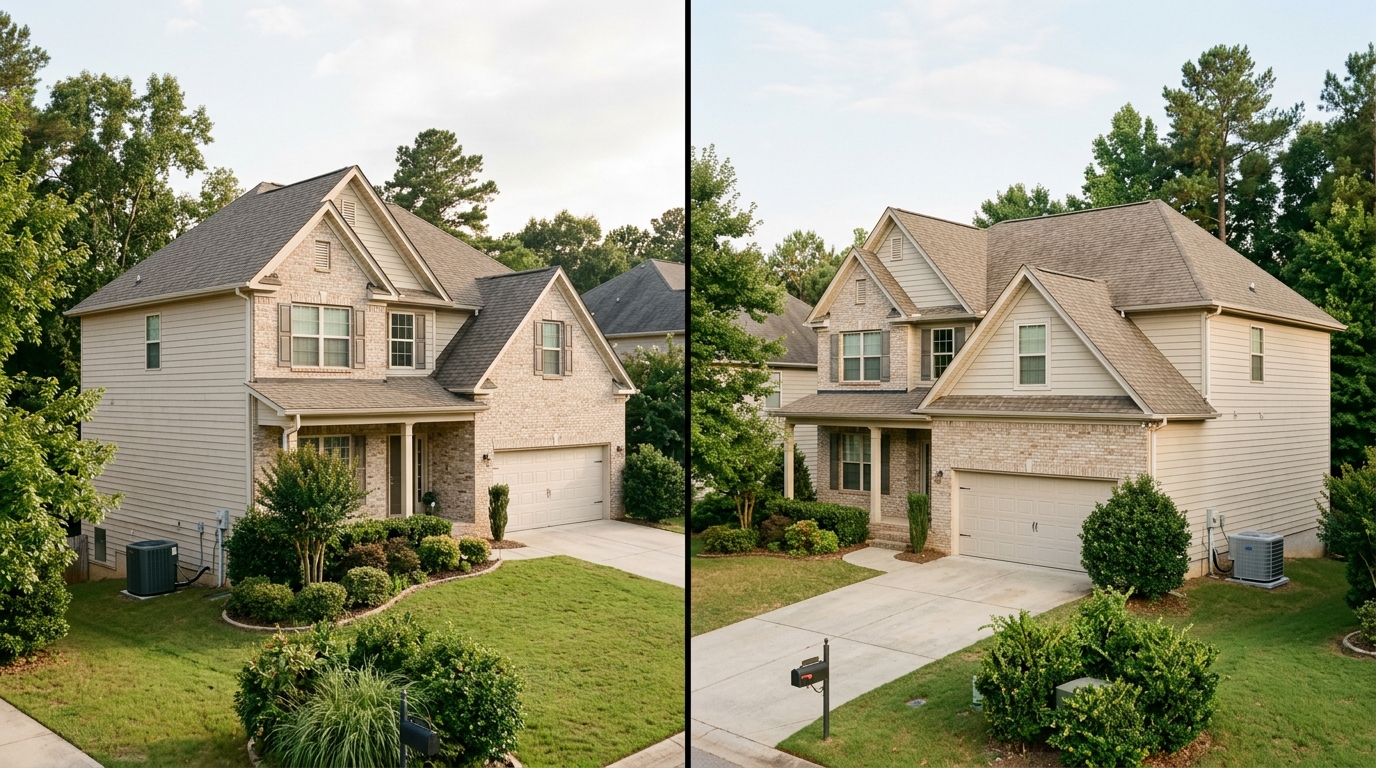
"I bought the same AC my neighbor has and my bill is way higher than his." I have heard this a hundred times. Pelham homeowner comparing notes with a relative in Hoover. Hoover homeowner comparing notes with a coworker in Pelham. Same brand, same SEER2, very different summer power bills.
Here is what is actually going on. Spoiler: the equipment is almost never the reason.
Same Equipment, Different Bills — How That Happens
A residential AC's energy consumption depends on three things. How hard the equipment has to work to maintain setpoint (load). How efficiently it converts electricity into cooling output (SEER2 rating). And how long it runs (duty cycle). The SEER2 is the same for two identical units. The load and duty cycle are not.
If your Pelham home runs 9 hours a day at peak summer and your cousin's Hoover home runs 6 hours a day in the same weather, your cousin's bill is going to be 30-40% lower for the same equipment doing the same job. The reason is not the equipment. It is the load.
Load comes from four big inputs: solar heat gain through windows and roof, conduction heat through walls and ceiling, infiltration of hot outside air through leaky envelope, and duct losses through attic ductwork. Same equipment, very different loads.
Pelham vs Hoover Housing Stock
Pelham's biggest building boom was 1995-2005 along the Highway 31 and Cahaba Valley Road corridors. A lot of these homes were built fast during the regional growth surge. Some shortcuts crept into ductwork, insulation, and envelope sealing that became standard practice later. Not all builders, not all homes. But enough that there is a real pattern.
Hoover has older housing stock in places like Bluff Park and Rocky Ridge — homes from the 70s and 80s with their own issues. But Hoover's newer construction in Park Square, Trace Crossings, Lake Cyrus, and the Greystone corridor was built with measurably tighter envelopes and better attic insulation than the same-era Pelham builds.
The result: two homes can be the same square footage and "feel" similar from the street but have meaningfully different cooling loads. The Hoover home runs less. The Pelham home runs more. The Pelham homeowner is not doing anything wrong. The home was just built to a different standard.
Elevation, Tree Cover, and Microclimate
Birmingham metro has real elevation variation within a short distance. Hoover at the top of Shades Mountain runs measurably cooler in the afternoon than Pelham down at the valley floor. The temperature difference is often 3-5°F at peak summer afternoon, which translates into real cooling load difference.
Tree canopy compounds the effect. Older Hoover neighborhoods with mature 60-foot hardwoods cast significant shade on roofs and west-facing walls. Many 2000s-era Pelham subdivisions stripped the original tree cover during development and have not yet grown the replacement canopy back. A west-facing roof getting full sun until 7 PM in July versus a west-facing roof shaded by mature oaks is a real load difference.
This is why a Hoover homeowner sometimes "doesn't need" to set their thermostat as low to feel comfortable — the radiant load through their attic and walls is lower to start with. The AC works less. The bill is lower.
The Ductwork Reality
The biggest variable I see between Pelham and Hoover homes of the same age is ductwork quality. Some of this is builder practice. Some of it is what happened in the twenty years since the home was built.
Per ENERGY STAR, the typical home loses 20-30% of conditioned air to duct leaks. That number is an average. In the worst Birmingham metro homes I have walked, duct loss is closer to 40%. In well-built and well-maintained homes, it is closer to 10%. That spread is the difference between a manageable summer bill and a brutal one — for the same equipment.
Pelham homes from the 1995-2005 boom often have flex duct runs that were installed quickly and have been pulled apart at the boots, crushed against trusses, or stripped of their outer insulation. The attic temperatures in Pelham regularly hit 130°F in July. Hot attic air leaking into supply trunks is a real load. Cold conditioned air leaking out into the attic is wasted money. Both happen on the same leaky ductwork.
Hoover homes built the same year often have the same vulnerabilities but tend to show up in slightly better condition in my experience. Why? Not entirely clear. Probably a combination of slightly higher build quality, better access for HVAC service over the years, and homeowner attention. The pattern is real even if the cause is not single-source.
Our companion piece on HVAC problems in older Birmingham homes walks through the specific ductwork issues we find most often.
Thermostat Habits Differ More Than People Realize
The other big driver of the same-equipment-different-bill gap is the people inside.
Some homes run the thermostat at 70°F all summer. Some homes run at 76°F. The difference at the meter is significant — every degree below 78°F adds roughly 3-5% to cooling cost per DOE guidance. Going from 70 to 76 cuts cooling cost by close to 20-25%. Same equipment. Same house. Just thermostat habits.
Programmable and smart thermostat use matters too. A home set to 78°F all day but bumped to 72°F at 5 PM when people arrive home runs a lower bill than a home held at 72°F all day every day. Yet a lot of homeowners do not run schedules — they just hold a single setpoint.
Our piece on what temperature to set your thermostat in summer covers the Birmingham-specific setpoints that balance comfort and cost.
What Actually Closes the Gap
If you are the Pelham homeowner with the higher bill — or the Hoover homeowner who thinks your bill should be lower than it is — here is the priority list.
Duct sealing. The single highest-impact fix for the bill gap between same-equipment Pelham and Hoover homes. Professional sealing of every accessible joint, seam, and boot in the supply trunk and branch ductwork. Pays back fast in any home with leaky ductwork.
Attic insulation top-up. Bring the attic to R-38 or R-49 with blown-in cellulose or fiberglass over existing insulation. Cuts the conduction load through the ceiling significantly. One-day job in most homes.
Air sealing the envelope. Caulk around windows, weatherstrip exterior doors, seal recessed light cans, seal the attic hatch. Each item is small. Together they cut infiltration meaningfully.
Programmable or smart thermostat with a real schedule. Set higher setpoints when no one is home. Bump down only when occupied. Most Birmingham metro homeowners leave 10-15% on the table by not running schedules.
Window film on west-facing glass. Reduces afternoon solar gain through bare west-facing windows. Underrated fix for the homes that get hot in the afternoon and stay hot until midnight.
Annual professional tune-up. Properly charged refrigerant, clean condenser coil, calibrated thermostat, tested capacitors. A tuned-up system moves more BTUs per kilowatt-hour than one that has not been serviced. Our spring tune-up service walks through the full checklist.
If you have done all of these and your bill is still high, then equipment is the conversation — but it is the last one to have, not the first.
While Pelham and Hoover are not on our primary Shelby County service area map, we serve adjacent communities — Chelsea, Calera, Columbiana, Montevallo, Sylacauga — that have the same comparison patterns. The same fixes apply. For the underlying services, see AC repair, duct cleaning and sealing, and maintenance.
Why trust this story: Reviewed by Birmingham Heating & Air Conditioning field technicians. Alabama HVAC Contractor licensed and EPA Section 608 Universal certified. Sources: ENERGY STAR Duct Sealing, DOE Insulation, DOE Programmable Thermostats. See our full editorial standards.
Author: John, 35-year HVAC technician, Alabama licensed, bonded, and insured. General observations about Pelham and Hoover housing stock and load patterns. Specific home assessments require on-site evaluation. Last updated 2026-05-12.
Related Services
Serving these cities
Chelsea • Calera • Sylacauga • Montevallo • Columbiana
Need HVAC Service?
Licensed Alabama contractor. Written estimate before any work begins. Call anytime.
(205) 649-4480Frequently Asked Questions
Read Next
Keep going. These pair well with what you just read.
About the Author: Birmingham Heating & Air Conditioning provides heating-first residential HVAC service to the Shelby County and Talladega corridor — Chelsea, Calera, Columbiana, Montevallo, and Sylacauga. Work is performed by John M. King, a licensed Alabama HVAC contractor (License #2020068), with 35 years of HVAC experience and EPA Section 608 Universal certification. Call (205) 649-4480 for service.
Ready to schedule service? Call (205) 649-4480 — Birmingham Heating & Air Conditioning serves Shelby County and the Talladega corridor.