
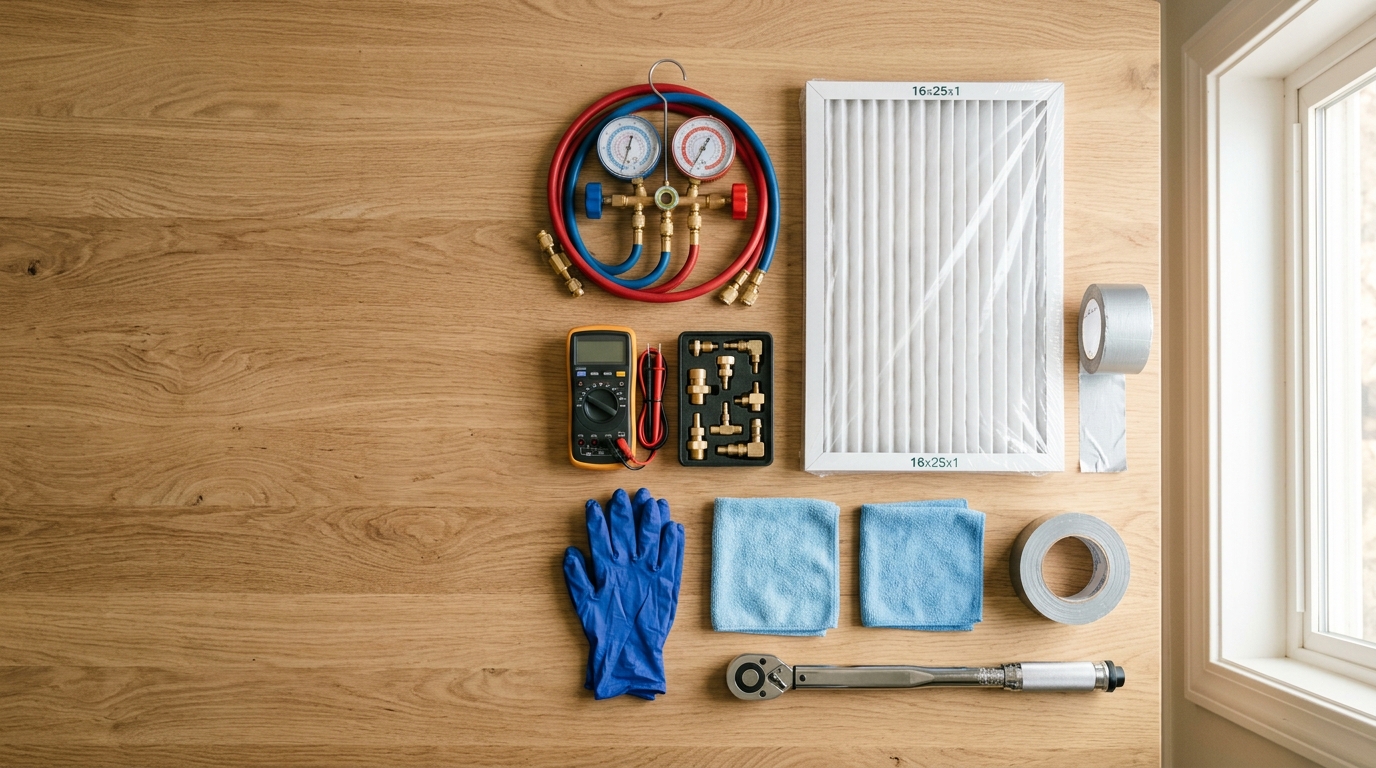
What a Real Maintenance Plan Should Include
Two full visits per year (spring AC tune-up, fall furnace or heat pump inspection), refrigerant pressure check, full electrical and capacitor testing, drain line clearing, coil cleaning, blower performance verification, and filter replacement on the system date. Around $400-600 a year for a single system in the north corridor is the honest price range. Anything below that is usually a loss leader to find expensive add-on work. Anything above $700 should be itemized in writing.
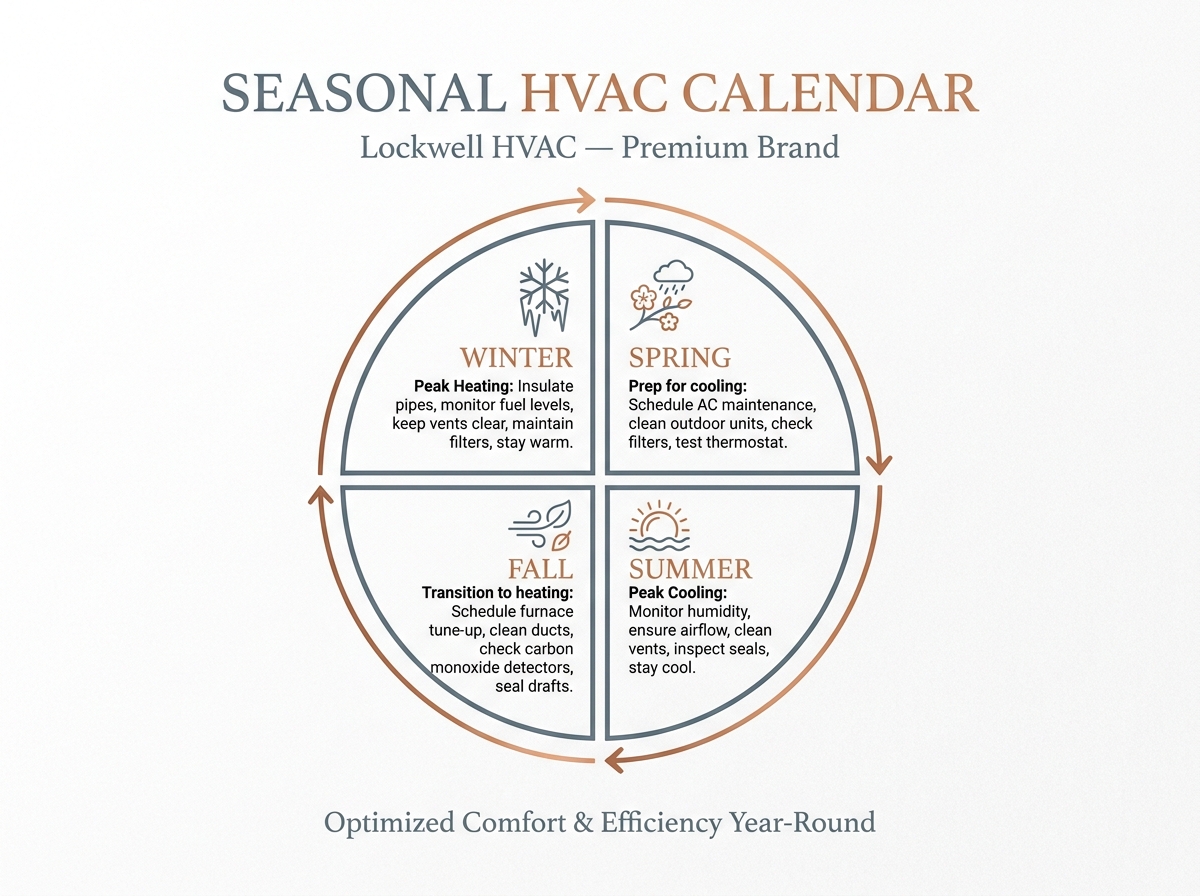
Why Premium Maintenance Plans Exist
A maintenance plan should be doing two things. First, it should keep your equipment running at its rated efficiency so you are not silently losing 10-15 percent of your cooling capacity to coil fouling, refrigerant drift, and electrical degradation. Second, it should catch problems while they are still cheap.
The U.S. Department of Energy notes that HVAC equipment loses roughly 5 percent of operating efficiency per year without professional maintenance. That math is real, and it stacks. A 5-year-old system that has never been maintained is functionally a 25 percent less efficient version of itself. Your power bill knows.
The harder question is what a "premium" maintenance plan actually buys you over a basic one. Most homeowners get pitched plans by phone with three tiers — silver, gold, platinum or some variation — and the line items get vague fast. Here is what actually matters.
The Two-Visit Baseline
Any serious maintenance plan covers two professional visits per year:
Spring AC Tune-Up (March-April typically):
- Refrigerant pressure check at outdoor and indoor units
- Superheat and subcooling measurement (confirms charge is correct, not just "in the green")
- Electrical inspection — contactor pitting, wire connections, voltage and amperage measurement
- Capacitor testing with a real meter, not "looks fine"
- Outdoor coil cleaning (rinse, brushed, sometimes chemical cleaner)
- Indoor evaporator coil inspection
- Drain line clearing and treatment (algicide tablet, vinegar flush, or both)
- Blower motor inspection, lubrication if applicable, current draw measurement
- Filter replacement or instruction on homeowner replacement schedule
- Thermostat calibration check
- Visual ductwork inspection at accessible points
Fall Heating Tune-Up (October-November):
- Furnace heat exchanger inspection with camera or visual (CRITICAL — carbon monoxide safety)
- Gas pressure check at inlet and manifold
- Burner cleaning and combustion analysis
- Flame sensor cleaning
- Inducer motor and pressure switch verification
- Igniter inspection or testing
- Heat pump reversing valve check (if heat pump system)
- Emergency heat strip operation verification
- Defrost cycle test (heat pump only)
A real visit takes 60-90 minutes. If a "tune-up" wraps in 25 minutes, the tech ran through a quick checklist and skipped the measurements. Those are the visits where small problems sit unnoticed until they become expensive emergencies.
Key takeaway: Ask your technician for the actual numbers from each visit — superheat, subcooling, refrigerant pressures, capacitor microfarads, amp draws. A real tech writes these down on a service report and gives you a copy. A box-mover hands you a checklist with checkmarks and no measurements.
What Each Line Item Actually Does
Refrigerant Pressure and Charge Verification
Refrigerant is the working fluid that absorbs heat from inside your home and rejects it outside. The system is sealed at install, but small leaks develop over time — at flare connections, brazed joints, and Schrader valve cores. A 10 percent low charge can produce a 20+ percent drop in cooling capacity.
A real charge check uses gauges, temperature probes, and the math (superheat for orifice systems, subcooling for TXV systems) to confirm the charge is correct, not just "shows green on the gauge." This is the most-skipped step in cheap maintenance plans.
For more on the R-454B transition that affects how refrigerant work is done in 2026, see our R-410A to R-454B transition guide.
Coil Cleaning
The outdoor condenser coil collects pollen, grass clippings, cottonwood fluff, and pet hair (yes, even in Mountain Brook — pollen alone is enough). A dirty coil can lose 10-20 percent of heat-rejection capacity, which forces the compressor to work harder, runs higher pressures, and shortens equipment life.
The indoor evaporator coil collects dust and moisture together — perfect conditions for biological growth. NADCA (the National Air Duct Cleaners Association) considers coil cleaning a foundational part of indoor air quality management.
A thorough coil cleaning involves spraying coil cleaner, letting it dwell, and rinsing with water — not just hosing it down quickly. Premium plans include this. Cheap plans skip it.
Electrical and Capacitor Testing
Capacitors are the most common failure point on residential HVAC systems. A capacitor that has drifted to 7.2 microfarads on a 7.5-rated component is technically "in spec" but on its way out. A real tech tests against the rated value (printed on the capacitor) and replaces preemptively when drift exceeds 6 percent.
Same logic applies to contactors. Pitted contact surfaces draw extra amperage, run hotter, and eventually fail in the middle of August. Catching pitting at spring tune-up is the difference between a $30 part swap and a $600 emergency call.
Drain Line Maintenance
Condensate drain lines clog with biological growth — slime that forms from dust + moisture sitting in the line. A clogged drain backs water into the indoor unit, trips the float switch (best case), or floods your ceiling if you have an attic air handler (worst case).
Drain treatment with algicide tablets or vinegar flush is cheap and effective. Premium plans include it; cheap plans charge as an add-on.
Blower Performance
A modern ECM blower has nothing to lubricate (sealed bearings) but does require static pressure verification and amp draw measurement. An older PSC blower needs lubrication if the bearing ports are accessible and the same electrical checks. A blower running outside spec is the silent killer of system efficiency — every component upstream gets compromised.
What Premium Plans Often Include (And Whether It Matters)
Priority Scheduling
Most premium plans include priority dispatch — your call gets bumped to the front of the queue during peak season. In Alabama, that matters. July emergency calls can sit on a waitlist for days. Priority status often gets a priority or next-day visit. This is one of the genuinely valuable premium add-ons.
Discounted Service Rates
Premium plans typically discount service call fees and labor rates 10-20 percent on any repair work outside the maintenance scope. The math depends on how often you call. If you genuinely never have problems, this benefit is small. If your system is older and you have called twice in the past year, it can pay for the plan by itself.
Filter Service
Some plans include filter delivery or replacement. Useful for homes that struggle to remember the schedule, but if you can manage filter replacement yourself, this is a small dollar value. Premium 4-inch media filters cost roughly $40-60 each at retail — a delivered-and-installed service might charge $80-120 for the same filter.
Equipment Warranty Protection
This is where things get murky. Some "premium" plans bundle in extended warranty coverage on parts beyond the manufacturer warranty. Read the contract carefully — many of these are de facto insurance policies with deductibles, exclusion clauses, and specific reporting requirements. They can be worth it on older equipment, but they are not maintenance — they are insurance.
What Should NOT Be on a Maintenance Plan
A few things get pushed as "premium" that are usually add-on revenue:
UV light installation. Useful for some homes with chronic mold issues, but it is an equipment add-on, not maintenance. Should not be bundled into your annual plan price without your explicit decision.
Duct cleaning. EPA guidance is clear: routine duct cleaning is not necessary for most homes. Duct cleaning is appropriate when there is visible mold, vermin infestation, or major contamination. It is not a yearly service. Bundling it into a "premium maintenance plan" is upselling. See our piece on duct cleaning — is it worth it for the full breakdown.
"System sanitization." Vague term that can mean coil cleaning (legitimate, should be in baseline) or chemical fogging (rarely beneficial, often upsold). Ask what is actually being done.
Surge protectors. Some plans bundle surge protector installation. Legitimate equipment but should be a one-time install decision, not an annual line item.
The Real Cost Math
For a single premium variable-speed system in the north corridor, expect to pay:
- Basic plan (2 visits, baseline checklist): $200-300/year — barely covers labor; corners will be cut.
- Standard plan (2 visits, full measurements, drain treatment, priority scheduling): $350-500/year — this is the honest middle range.
- Premium plan (above plus discounted service rates, free filter, equipment-specific add-ons): $500-700/year — fine if you use the perks.
- "Diamond/Elite" plans above $700: check carefully what is added; often includes extended warranty buy-ins disguised as maintenance.
A home with two systems (common in larger Mountain Brook and Vestavia homes) approximately doubles the cost. Some contractors offer a multi-system discount.
How to Evaluate a Maintenance Proposal
When a contractor pitches you a plan, ask for:
1. A written list of what each visit includes — line items, not marketing copy 2. The labor rate for non-covered work (so you can compare to others) 3. Whether the plan is transferable if you sell the home 4. The cancellation terms 5. A sample service report from a recent customer (anonymized)
That last one is the most revealing. A real maintenance company gives you a 2-3 page report after every visit with measurements, photos, and recommendations. A box-mover gives you a single page with checkmarks.
For why proper maintenance is non-negotiable on premium variable-speed equipment, see variable-speed deep dive.
What You Should Do Between Visits
A maintenance plan does not replace homeowner discipline. Between visits, you should be:
- Changing filters every 30-60 days during cooling season
- Keeping 2 feet of clearance around the outdoor condenser
- Listening for new noises and acting on them quickly
- Running the AC briefly each month even in mild weather (keeps seals lubricated)
- Watching humidity readings on the thermostat (sustained high humidity indicates a problem)
For the deeper homeowner playbook, see our piece on how often to change air filters in Alabama.
[CTA]
The Bottom Line
A good maintenance plan in the $400-600 range pays for itself in three ways: extended equipment life (often 3-5 years past the unmaintained baseline), maintained efficiency (5 percent compounding per year), and avoided emergency calls during peak season. It is one of the few HVAC purchases where the math is clearly in your favor — but only if the visits are real.
Ask for measurements. Ask for written reports. Walk away from anything that smells like a checklist drive-by.
How much should HVAC maintenance cost per year?
A thorough single-system maintenance plan in the Birmingham north corridor runs roughly $350-600 per year for two visits including refrigerant checks, coil cleaning, electrical testing, drain line treatment, and full system measurements. Plans below $300 are typically loss leaders intended to find expensive repair work. Plans above $700 often include extended warranty buy-ins disguised as maintenance. Two systems in larger homes approximately double the cost.
Is a maintenance plan worth it for a new HVAC system under warranty?
Yes, for two reasons. First, most manufacturer warranties require documented annual professional maintenance — if you skip it and a major component fails, the warranty claim can be denied. Second, new equipment still drifts on refrigerant charge and develops electrical wear that maintenance catches. A new system gets the most life out of being maintained from day one rather than starting maintenance at year 5 after problems compound.
What is the difference between basic and premium maintenance plans?
Basic plans typically cover the two seasonal visits with a checklist of inspections but skip detailed measurements. Premium plans add full refrigerant charge verification (superheat/subcooling math), capacitor and contactor electrical testing with replacement at drift thresholds, deep coil cleaning, drain line treatment, and usually priority scheduling. The premium tier is worth it on variable-speed equipment, in homes with two or more systems, or for homeowners who want documented service records for warranty purposes.
Do I really need two HVAC visits per year?
Yes, if you have central air conditioning and heating. The spring visit verifies cooling readiness before peak load season, and the fall visit catches heating issues (especially gas furnace heat exchanger safety) before winter. Heat pumps benefit equally because they switch operating modes and need verification on both sides. Skipping the fall visit on gas equipment is a real safety risk — a cracked heat exchanger leaks carbon monoxide.
Can I do HVAC maintenance myself?
Some of it, yes. Filter changes, keeping the outdoor unit clear of debris, gentle outdoor coil rinsing, and visual inspection are homeowner tasks. Refrigerant work, electrical testing, combustion analysis, capacitor replacement, and any work inside the air handler or furnace cabinet require EPA certification and proper equipment. A reasonable split is homeowner discipline between visits, professional service twice a year. Doing all maintenance yourself voids manufacturer warranties on most premium equipment.
What does a thorough maintenance visit actually look like?
Sixty to ninety minutes on-site. The tech parks, walks the outdoor unit, removes the panel, measures pressures with gauges and temperatures with probes, calculates superheat or subcooling, inspects the electrical components with a multimeter, tests capacitor microfarads against the rated value, cleans the outdoor coil, moves to the indoor unit, checks the evaporator coil and drain line, treats the drain, measures static pressure and blower amperage, replaces the filter, calibrates the thermostat, and writes a multi-page report. If a tech does all of that in 25 minutes, they skipped most of it.
Should my maintenance plan include duct cleaning?
No. EPA guidance is clear that routine duct cleaning does not provide measurable benefit for most homes. Duct cleaning is appropriate when there is visible mold growth, vermin infestation, or major contamination from a specific event. Plans that bundle yearly duct cleaning into the maintenance fee are upselling — you are paying for a service most homes do not need. Save that money for genuine equipment maintenance. See our piece on duct cleaning — is it worth it for the full picture.