What Annual HVAC Maintenance Includes
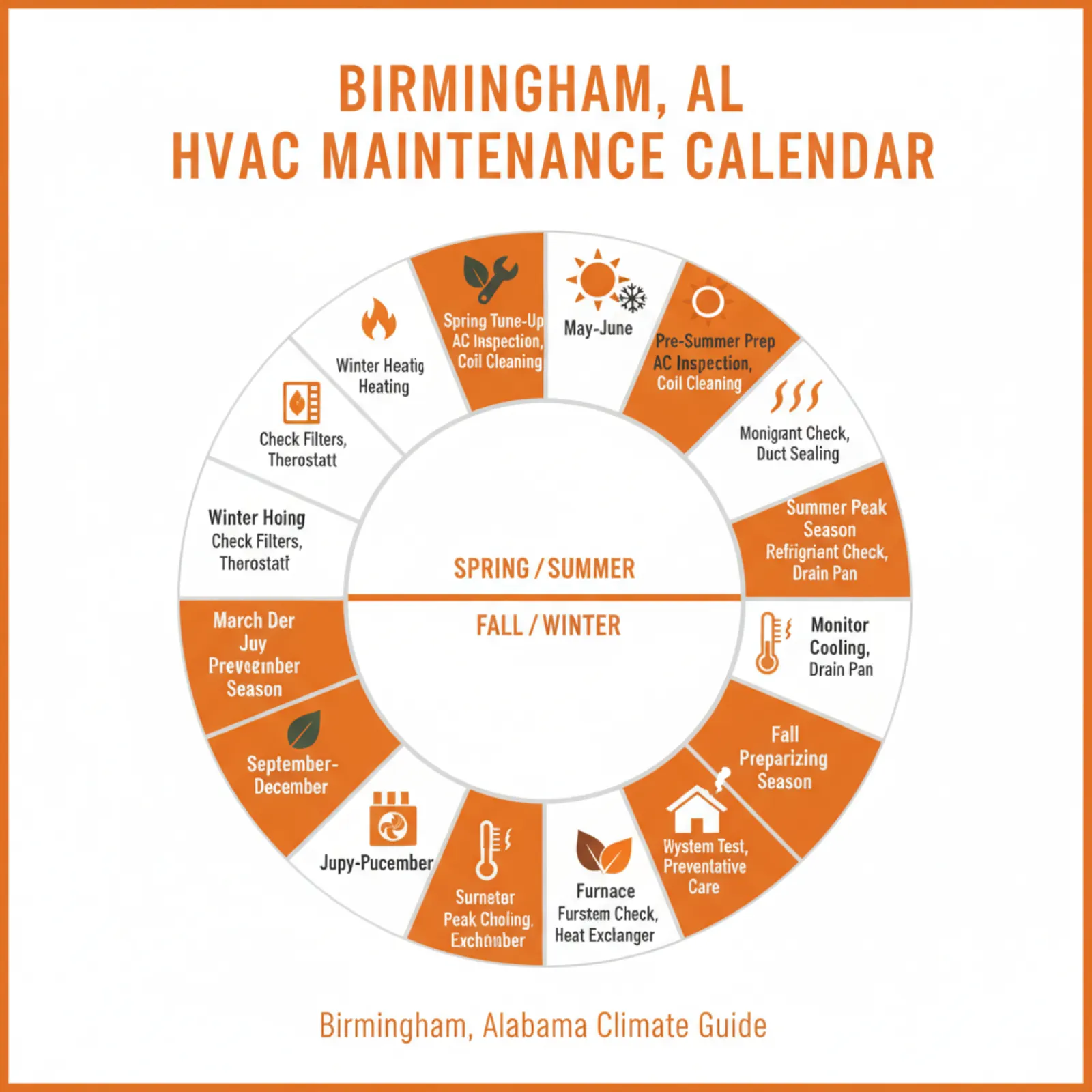
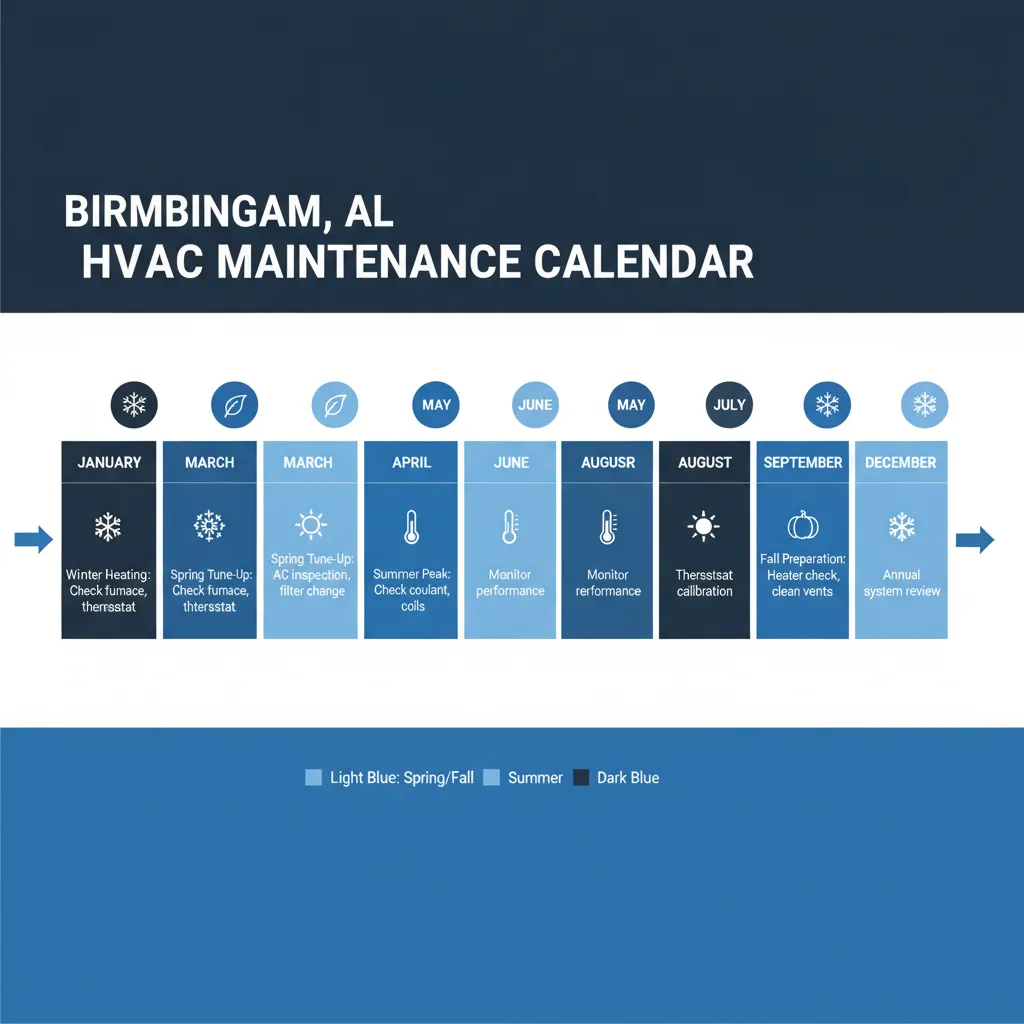
A professional tune-up covers coil cleaning, refrigerant check, electrical inspection, motor lubrication, and thermostat calibration. North Birmingham homes need this twice yearly due to extreme heat, humidity, and pollen loads.
North Birmingham Climate Demands More From Your HVAC
Annual HVAC checkups in North Birmingham are not a luxury — they are what keeps a $6,000 system from dying at year eight instead of year eighteen. This area faces a brutal combination of heat, humidity, and pollen that puts serious stress on equipment. Twice-yearly maintenance catches the problems this climate creates before they turn into breakdowns.
Communities like Gardendale, Fultondale, Center Point, and Adamsville sit in one of the highest pollen-count zones in the Southeast. That airborne debris coats your equipment inside and out, reducing heat transfer and forcing components to work overtime.
The Alabama humidity compounds the problem. Moisture promotes mold growth on evaporator coils and inside ductwork — issues that affect both system performance and indoor air quality. The EPA identifies indoor air quality as a significant health concern, especially in humid climates.
What Happens During a Professional Tune-Up
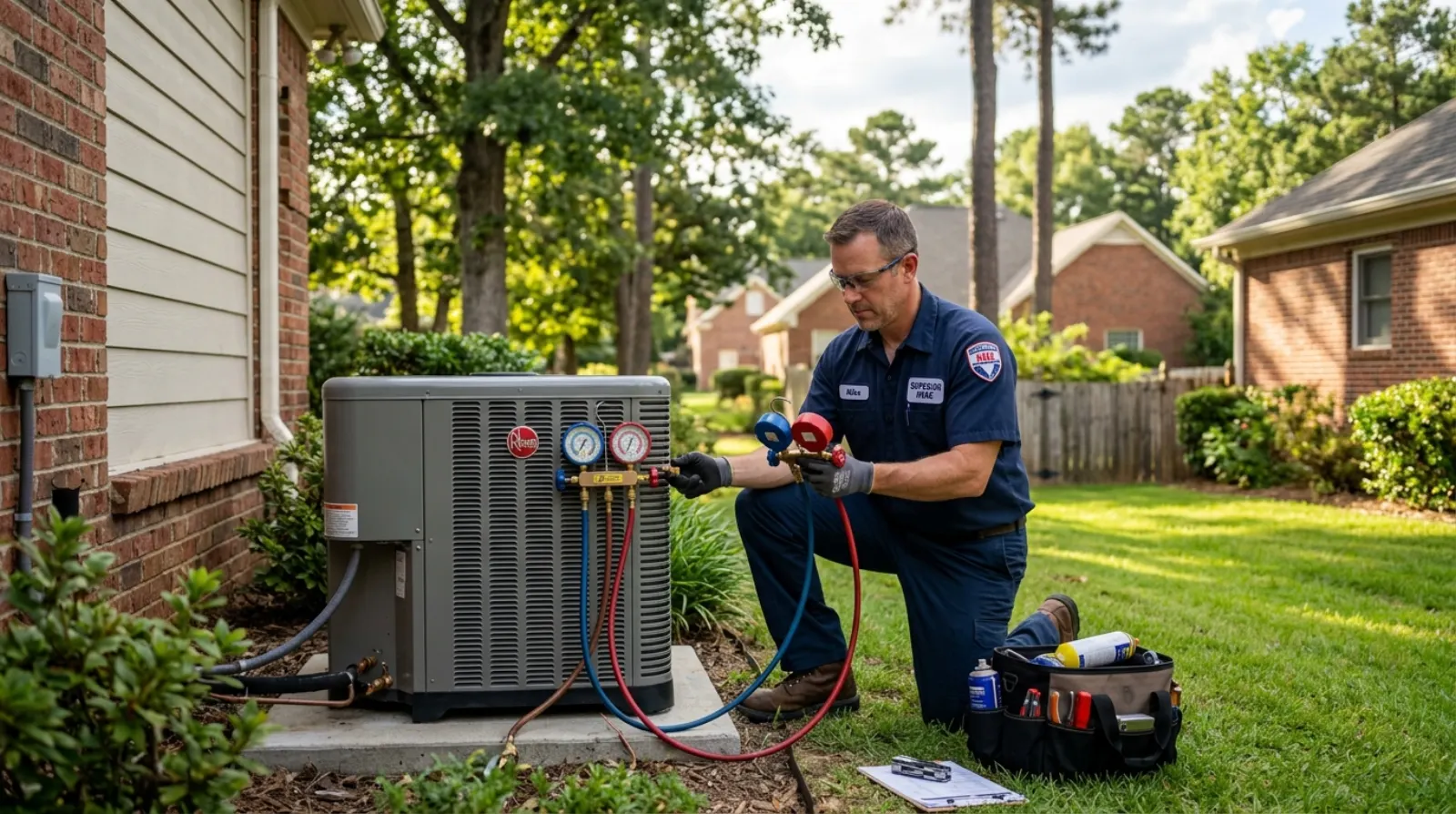
During a maintenance visit, an EPA Section 608 certified technician cleans your evaporator and condenser coils, checks refrigerant levels, inspects electrical connections, lubricates moving parts, and tests system performance. This thorough inspection takes about an hour.
Here is what each step accomplishes:
Coil cleaning restores heat transfer efficiency. Dirty coils are the silent killer of HVAC performance — Alabama pollen and dust coat your coils every season, forcing the system to work harder. According to ASHRAE (American Society of Heating, Refrigerating and Air-Conditioning Engineers), clean coils can improve cooling efficiency by 10 to 15 percent.
Refrigerant charge verification ensures your system operates at design capacity. Low refrigerant means the system runs longer to achieve the same cooling, which increases energy consumption and stresses the compressor.
Electrical inspection covers every wire, terminal, and connection in the system. This is not optional maintenance — it is safety-critical work.
Why Electrical Inspections Prevent Fires
Electrical connections loosen over time from vibration and thermal cycling. A loose connection creates electrical resistance, which generates heat, which can damage components or create a fire hazard.
The NFPA (National Fire Protection Association) identifies electrical failures as a leading cause of residential fires. HVAC systems cycle thousands of times per year, and each cycle produces vibration that gradually loosens wire terminals.
A technician tightens every connection, checks amp draws on motors and compressors against manufacturer specifications, and tests capacitors for proper microfarad ratings. Weak capacitors cause motors to overheat and fail — a common emergency call across Gardendale, Irondale, and Pleasant Grove during peak summer.
Key takeaway: A capacitor that tests at 10 percent below its rated value is already on borrowed time. Professional maintenance catches these weak components before they fail on the hottest day of summer when you need your system most.
Refrigerant Does Not Get Used Up
Refrigerant does not get consumed like gasoline. Your HVAC system is a sealed loop — if the refrigerant level is low, the system has a leak somewhere. Annual checkups catch slow leaks early, before they damage the compressor.
Compressor replacement costs thousands of dollars. A refrigerant leak repair costs a fraction of that amount. The math overwhelmingly favors catching leaks early through routine maintenance.
The EPA regulates refrigerant handling under Section 608 of the Clean Air Act. Only EPA-certified technicians may handle refrigerants, and all leaks must be repaired — venting refrigerant to the atmosphere is a federal violation.
Homes across Bessemer, Hueytown, and Helena with older R-22 systems face additional urgency. R-22 production ended in 2020 per EPA mandate, and remaining supplies command premium prices.
The Math on Preventive Maintenance
The math is simple. A maintenance visit costs far less than a single emergency repair call. Systems that receive annual maintenance last 5 to 7 years longer than neglected ones, according to ACCA industry data. That is thousands of dollars in extended equipment life. For the realistic year-by-year breakdown, see how long HVAC systems actually last in Alabama — and how often you should be changing the filter to get there.
Beyond equipment longevity, maintained systems operate more efficiently every day they run. The cumulative energy savings over 15 to 20 years of equipment life are substantial — especially in Birmingham where cooling costs dominate household energy budgets from April through October.
Most equipment manufacturers require documented annual maintenance to maintain warranty coverage. Skipping maintenance gives the manufacturer grounds to deny a claim on a compressor, heat exchanger, or other major component.
[CTA]
How often should North Birmingham homes get HVAC maintenance?
Twice per year — spring tune-up before cooling season and fall tune-up before heating season. The high pollen, humidity, and temperature extremes in the Gardendale, Fultondale, and Center Point area demand more frequent professional attention than milder climates.
What does an HVAC technician actually check during a tune-up?
A comprehensive tune-up covers evaporator and condenser coil cleaning, refrigerant charge verification, electrical connection tightening and testing, motor lubrication, capacitor testing, thermostat calibration, drain line clearing, and overall system performance measurement.
Can skipping HVAC maintenance void my warranty?
Yes. Most major HVAC manufacturers — including Carrier, Trane, Lennox, and Rheem — require proof of annual professional maintenance to honor warranty claims on major components like compressors and heat exchangers.
Why is my refrigerant low if it does not get used up?
Low refrigerant always indicates a leak in the sealed system. Refrigerant circulates in a closed loop and should never need topping off. A qualified EPA-certified technician should locate and repair the leak rather than simply adding refrigerant.
How much longer do maintained HVAC systems last?
Industry data from ACCA shows that systems receiving annual professional maintenance last 5 to 7 years longer than neglected systems. Given that HVAC replacement costs thousands of dollars, annual maintenance delivers significant return on investment.