
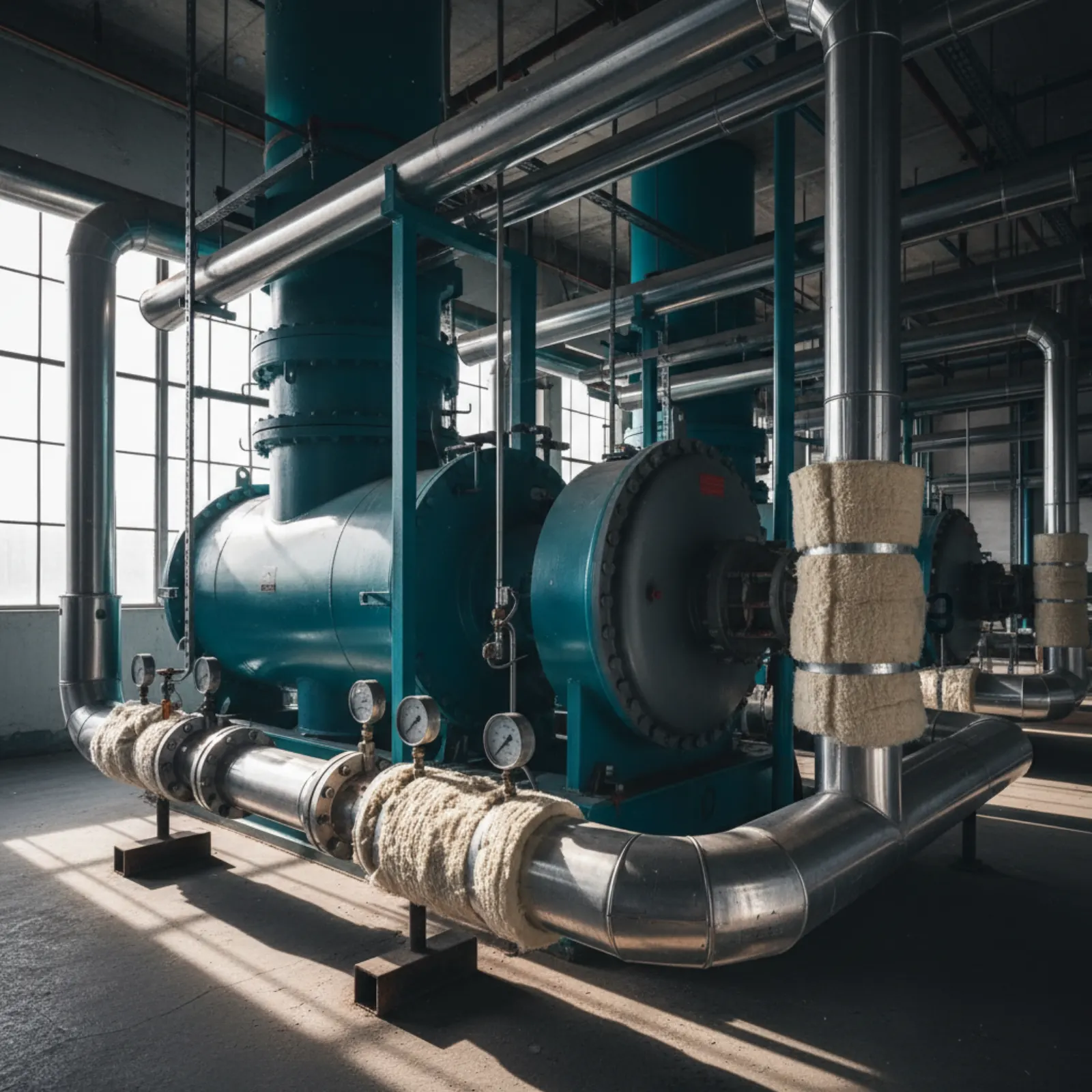
A commercial chiller carries 200–800 pounds of refrigerant. EPA Section 608 sets a 10% annual leak threshold. When a chiller exceeds it, federal law requires repair within 30 days. For Birmingham facility managers, chiller service is a regulatory function as much as a mechanical one.
Five failure modes, by frequency, in Birmingham chillers.
Most chiller failures are not random. They follow identifiable patterns tied to maintenance history, equipment age, and Birmingham's climate. These are the modes we see most on commercial service calls.
Birmingham's pollen season — February through May — loads condenser fins rapidly. A fouled condenser raises condensing pressure, drives compressor discharge temperature toward trip thresholds, and reduces capacity. Annual condenser cleaning before spring cooling load is the single highest-value preventive task.
Vibration over thousands of operating hours causes slow refrigerant loss. Systems losing refrigerant run at reduced capacity and elevated compressor temperature. For systems above 50 pounds, a running annual leak rate above 10% triggers EPA Section 608 mandatory repair obligations.
Compressor bearings require clean, properly viscosity oil. Oil analysis — a laboratory sample taken at each PM visit — detects metal particle contamination before failure. Skip oil sampling for several PM cycles and you eliminate the early warning.
Water-cooled chillers depend on the tower maintaining clean, chemically treated condenser water. Scale buildup on condenser tubes — measurable in fouling factor against AHRI 550/590 baselines — reduces heat transfer and compressor efficiency simultaneously.
Variable-frequency drive chillers — Trane Series R with CVHF, Carrier Evergreen 23XRV — have integrated electronic controls that generate fault codes requiring diagnostic software access. Not field-accessible without manufacturer-authorized tools and training.
Centrifugal calls route to centrifugal-certified tech with R-123 / low-pressure recovery. Screw / scroll route to standard recovery. Absorption routes to LiBr-trained tech. We don't send the wrong tool to the wrong machine.
Aging chiller plant: PM, repair, or replace?
Chiller replacement is a capital decision facility managers face with 15- to 25-year-old equipment. The decision framework below uses actual cost data — not a salesperson's ROI calculator.
Machine under 15 yr, refrigerant not R-22 / R-11, annual repair cost < 15% of replacement, no major compressor or heat-exchanger damage. A well-maintained chiller on modern refrigerant runs 25 years.
One-time capital expenditure that meaningfully extends life — compressor rewind, bearing replacement on otherwise sound machine — and refrigerant type does not create ongoing reclaimed-refrigerant cost exposure. Less appropriate when the machine has multiple annual repairs.
Past 20 years, running R-22 or R-11 with ongoing refrigerant loss, multiple compressor or heat-exchanger events, or AIM Act phase-down trajectory making continued operation uneconomic. Lead time on large chiller equipment now 18–24 months — start replacement planning early.
Standards cited: EPA Section 608 · ASHRAE Standard 15 · ASHRAE 180 · AHRI 550/590.
"On a recent downtown office property, the chiller logged 12% leak rate. The owner had 30 days under federal law. We pulled R-123 charge, repaired four shaft seals, and were under threshold before the audit."
Questions we hear from facilities teams.
What chiller platforms do you service in Birmingham?
How does EPA Section 608 apply to commercial chillers?
What are the most common chiller failure modes in Birmingham buildings?
Do you handle R-22 legacy chillers?
What does a chiller PM visit include?
Not an urgent? Schedule the diagnostic.
For active chiller outages, call us directly. For diagnostic assessments, oil analysis, and PM contract scoping — schedule the assessment.
Let’s set up your service plan.
Commercial buildings only. Tell us about your building and equipment and we'll follow up with a plan and a quote. Prefer to talk? Call (205) 649-4480 .
- Scheduled maintenance plans, scoped to your equipment
- RTUs, chillers, VRF, walk-in coolers, make-up air
- Priority service for plan customers
- Portfolio & property-management accounts
Request a service quote
We'll email you back within business hours. Prefer to talk now? Call the line above.
Commercial HVAC Questions
What chiller platforms do you service in Birmingham?
We service centrifugal, screw, scroll, and absorption chiller platforms. On the centrifugal side, technicians have hands-on experience with Trane CenTraVac (low-pressure, R-123), Carrier 19DV (R-1233zd), York YK, and Daikin Magnitude. Screw chillers include Trane CGAM air-cooled and Carrier 30XA/30HXC. Scroll chillers include Carrier 30MP and Daikin air-cooled scroll platforms.
How does EPA Section 608 apply to commercial chillers?
EPA Section 608 sets a 10% annual leak rate threshold for commercial AC systems with charges over 50 pounds. Most commercial chillers carry 200 to 800 pounds of refrigerant. When a chiller exceeds the 10% threshold, federal regulations require repair within 30 days and ongoing leak-rate documentation.
What are the most common chiller failure modes in Birmingham buildings?
Condenser fouling on air-cooled chillers is the most frequent preventable failure in Birmingham — Alabama pollen season loads condenser coils rapidly, raising condensing pressure and compressor discharge temperature until the chiller trips on high head. Refrigerant leak from Schrader valves and compressor shaft seals is the second most common issue.
Do you handle R-22 legacy chillers?
Yes. Legacy centrifugal chillers on R-11 and R-113 (now reclaimed CFC) and older equipment on R-22 (HCFC) remain in service in a significant portion of Birmingham's older commercial building stock. R-22 production ended in 2020; reclaimed refrigerant is the only legal supply.
What does a chiller PM visit include?
A chiller PM visit follows ASHRAE Standard 180 scope categories for refrigerant-cycle equipment. Key tasks: refrigerant pressure log; oil level check and oil sample; vibration measurement on compressor and pump bearings; electrical connection inspection; controls calibration; condenser coil cleaning (air-cooled) or cooling tower inspection (water-cooled).